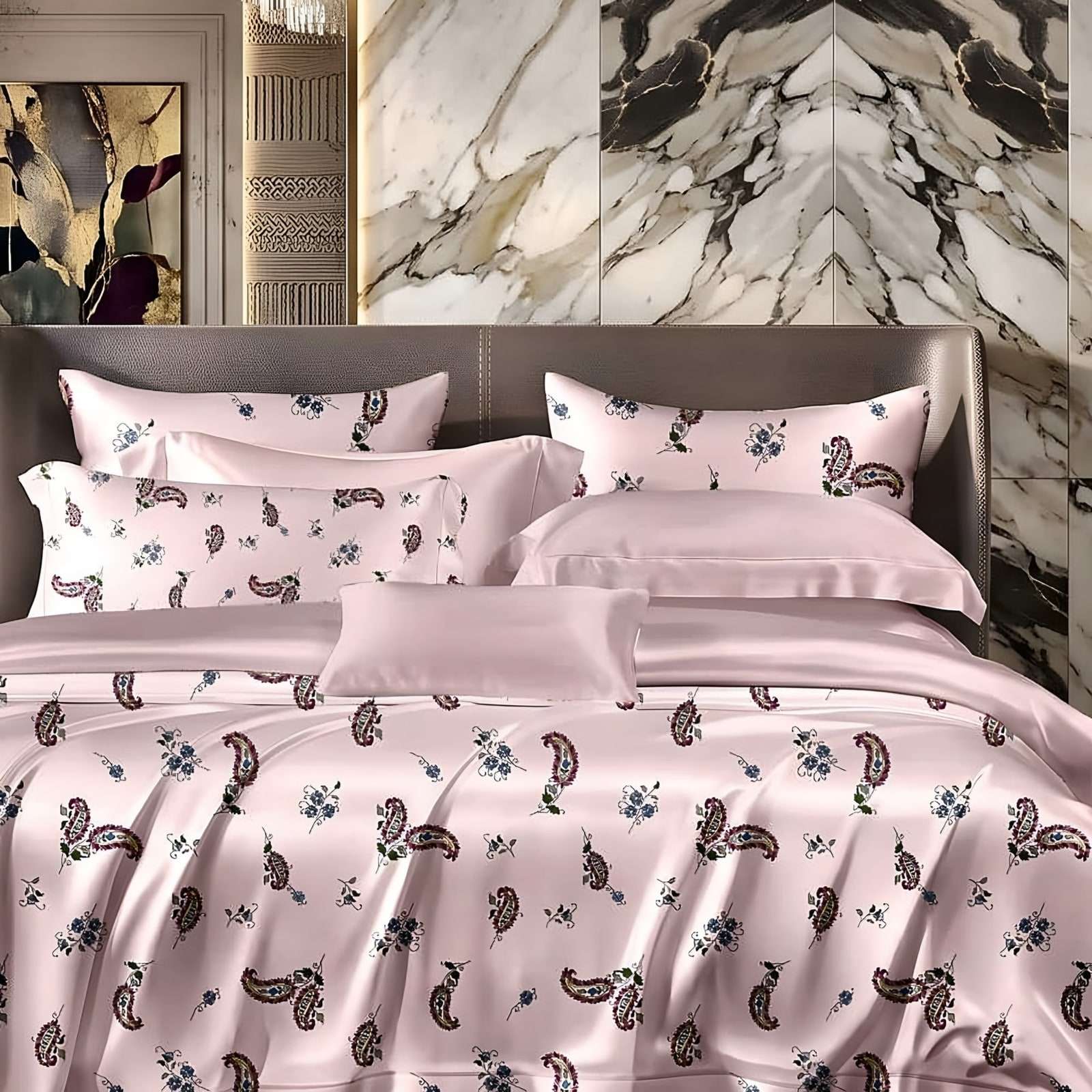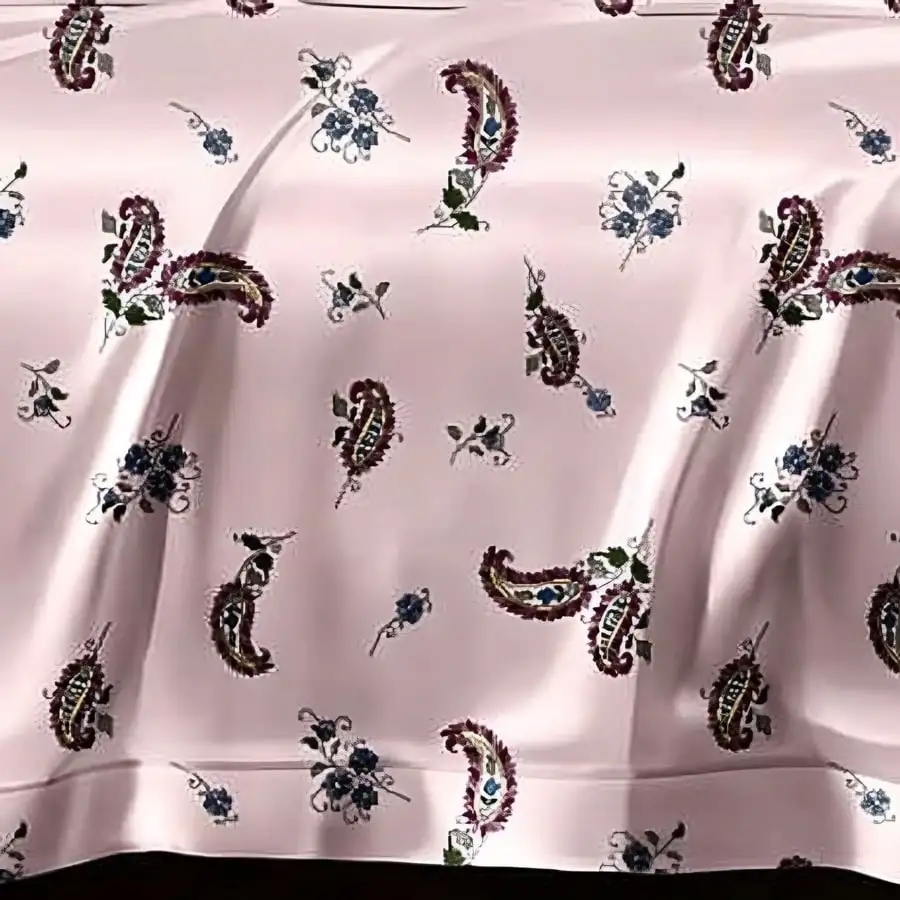

The story behind the print
Paisley (buta)
- Origin:
- Persia and Kashmir
- Since:
- Kashmir shawls from the 17th century
The curved teardrop motif that travelled from Persia to the shawls of Kashmir, and then to the whole world.
In India the paisley is the buta or keri (mango). The shape is believed to have come from ancient Persia, where it was known as the boteh. By the late 17th century it was being woven into the famous Kashmir shawls, first as a slender flowering plant, later as the plump, flower-filled teardrop we know today.
In the 18th century Kashmir shawls became a fashion in Europe, and weavers in the Scottish town of Paisley made so many copies that the town’s name became the English name for the motif. So the “paisley” on a bedsheet is really an Indian and Persian design with a Scottish nickname.
You will find the buta in many of our ranges, from small scattered butis to large cascading paisleys.